What counts as a 2026 photograph?
The images below are tied to fieldwork or a survey carried out in 2026. That is different from a gallery merely updated in 2026. Each caption explains the expedition or survey connection, and each source link leads to the organization’s original page.
Latest / What’s Happening Now
2026 field records: NOAA’s spring Bottom Trawl Survey photographed an Atlantic angel shark, while a March expedition in the Galápagos Marine Reserve photographed and tagged whale sharks.
2026 shark photographs

Atlantic angel shark
This small, flattened shark was caught and photographed during Leg 1 of NOAA’s spring 2026 Bottom Trawl Survey. Its body shape helps it live close to the seafloor, where it can be easy to mistake for a ray.Credit: Sarah Ring McLay / NOAA Fisheries · 2026 survey gallery
Seeing the body plan
The second NOAA view makes the shark’s broad front and tapering body easier to compare with other bottom-dwelling animals. Photographs like this help scientists document what was found alongside measurements and species records.Credit: Sarah Ring McLay / NOAA Fisheries · 2026 survey gallery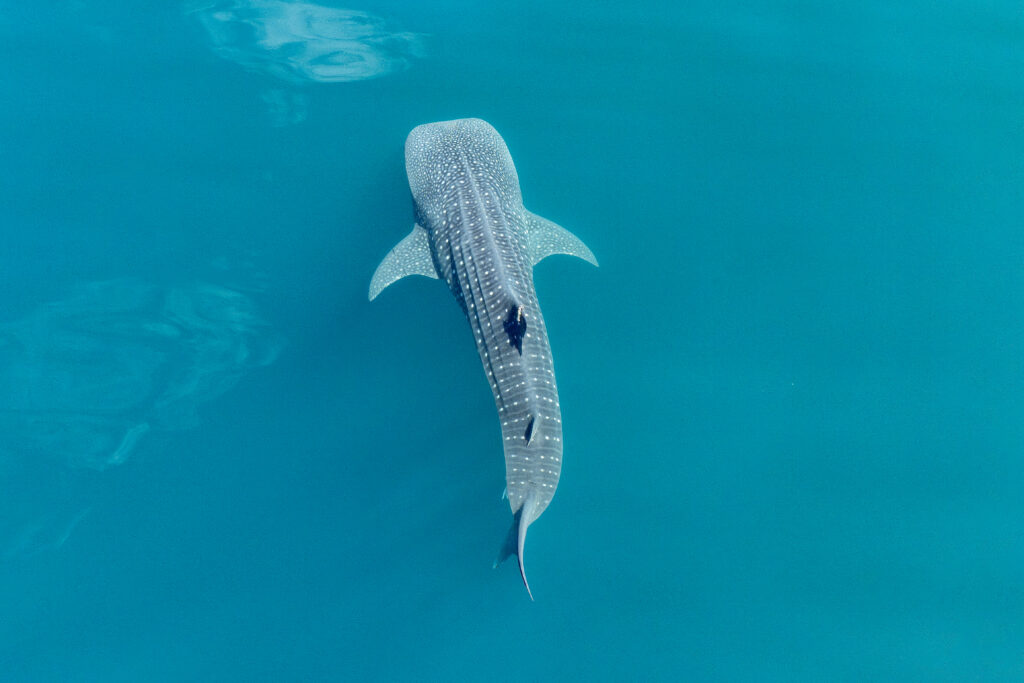
Following a whale shark
During a March 2026 expedition in the western Galápagos Marine Reserve, researchers searched for and tagged whale sharks to learn more about their long-distance movements. The spot pattern and tag help researchers recognize an individual over time.Credit: Martín Narváez · Galápagos Science Center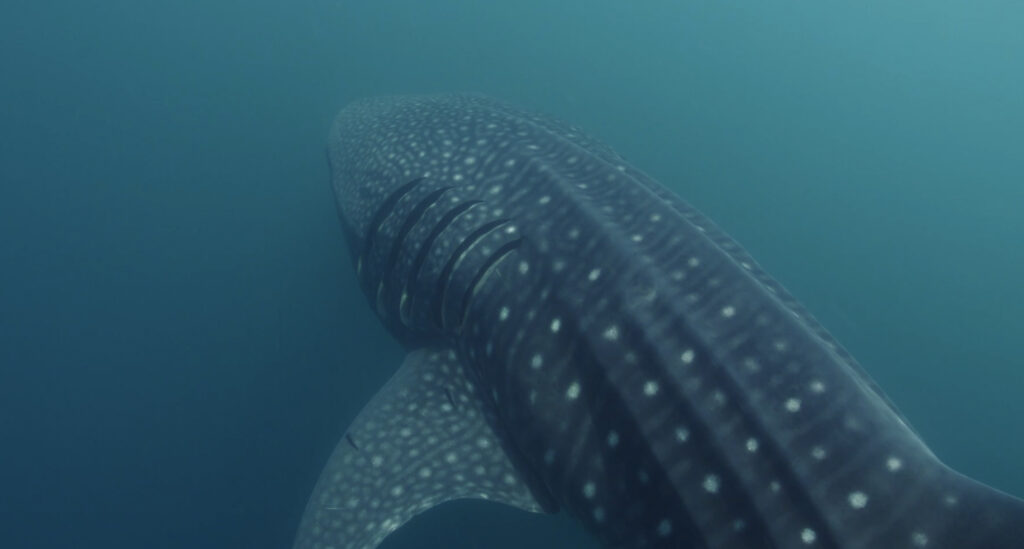
Watching a gentle giant feed
Whale sharks are the largest fish, but they filter tiny organisms from the water. An underwater photograph lets researchers and students see the shark’s size, mouth, spots, and feeding behavior in its natural habitat.Credit: Galápagos Science Center · March 2026 expedition reportHow a picture becomes evidence
A photograph is most useful when it is connected to a date, place, species identification, and field method. Survey teams pair images with measurements, notes, tags, or samples. Researchers can then compare the same species or individual later instead of treating an exciting picture as proof by itself.
That is why this gallery separates “photographed during 2026 fieldwork” from older images in the evergreen Sharks lesson. The older page teaches the biology; this page records a dated snapshot of research.
Explore related topics
Continue with how sharks live, whales and dolphins, ocean exploration in 2026, or coral reefs.